
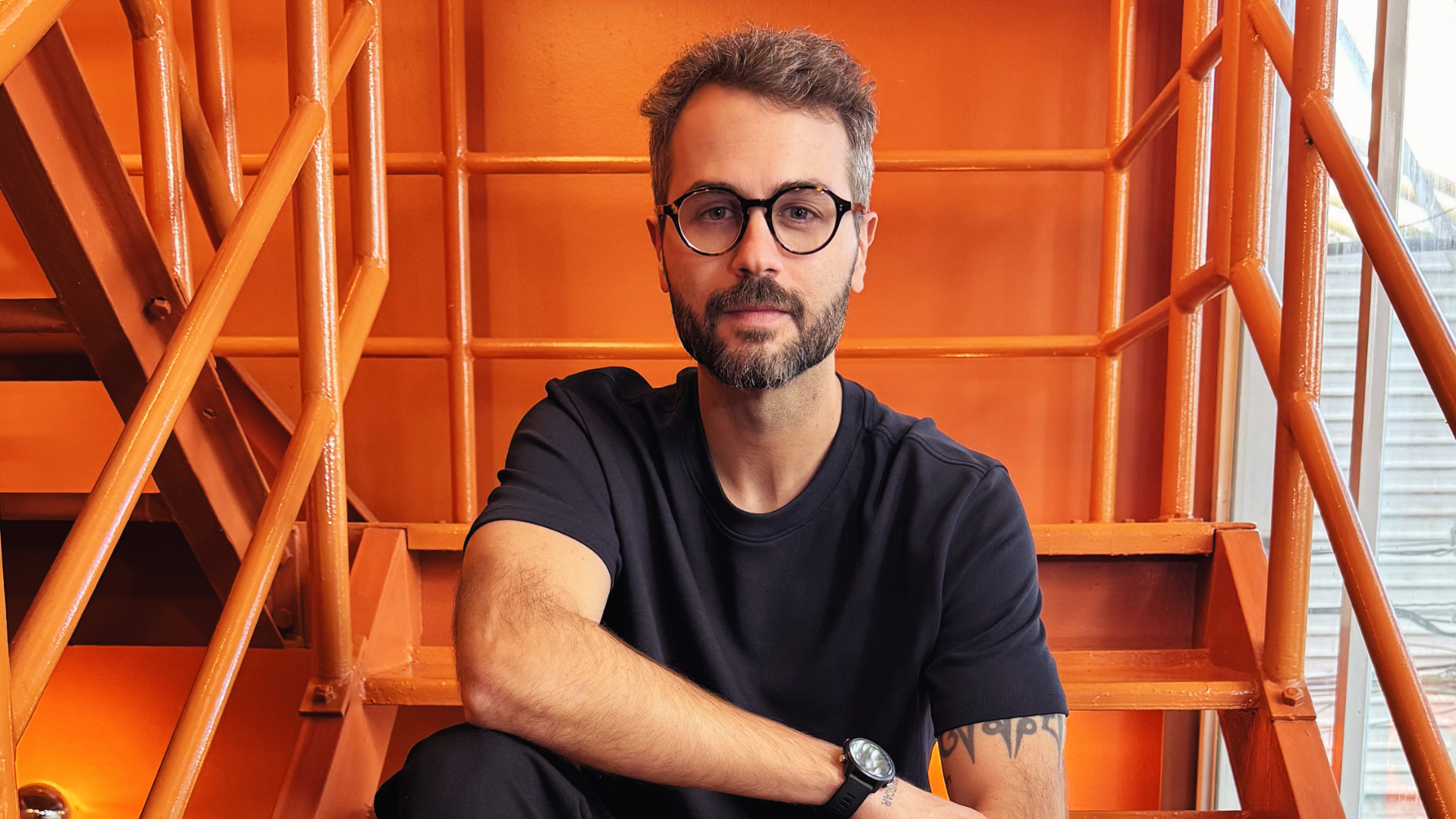
By Vinícius Lotti, General Strategy Director at ATENAS.ag
This month, I participated in a panel at Rio2C, one of the biggest creativity and innovation events in Latin America, where I had the opportunity to discuss alongside industry leaders a topic that has been triggering my thoughts for a while. We delved into the impact of algorithms on the way we live, consume, and shape our cultural preferences and repertoires. Our conversation also explored the repercussions of this in the realm of music and entertainment, two of the most sought-after sectors by brands striving to engage with their consumer base.
But deep down, it wasn't just a discussion about music or marketing; it was almost like an anthropological conversation.
We are living in the era of hyper-personalization. Platforms and their algorithms know what we like to listen to, watch, eat, and consume. They know which artists we are fans of, which genres we prefer, and which content is most likely to capture our attention. From a UX perspective, it seems extraordinary. From a cultural standpoint, there may be some uncomfortable questions to consider.
What happens when discoveries give way to the predictable?
Are algorithms replacing our curiosity?
Are we losing the ability to build more authentic repertoires and make choices for ourselves?
The music industry may be one of the best places to observe this phenomenon.
Today, algorithms influence plays, views, playlists, consumption trends, relevance, and even the speed at which artists gain prominence within the music industry. Whether directly or indirectly, they help shape cultural conversations, influencing our ears and conversations at the bar, at work, on the street. They impact international tours, influence festival lineups, and determine which sounds reach us.
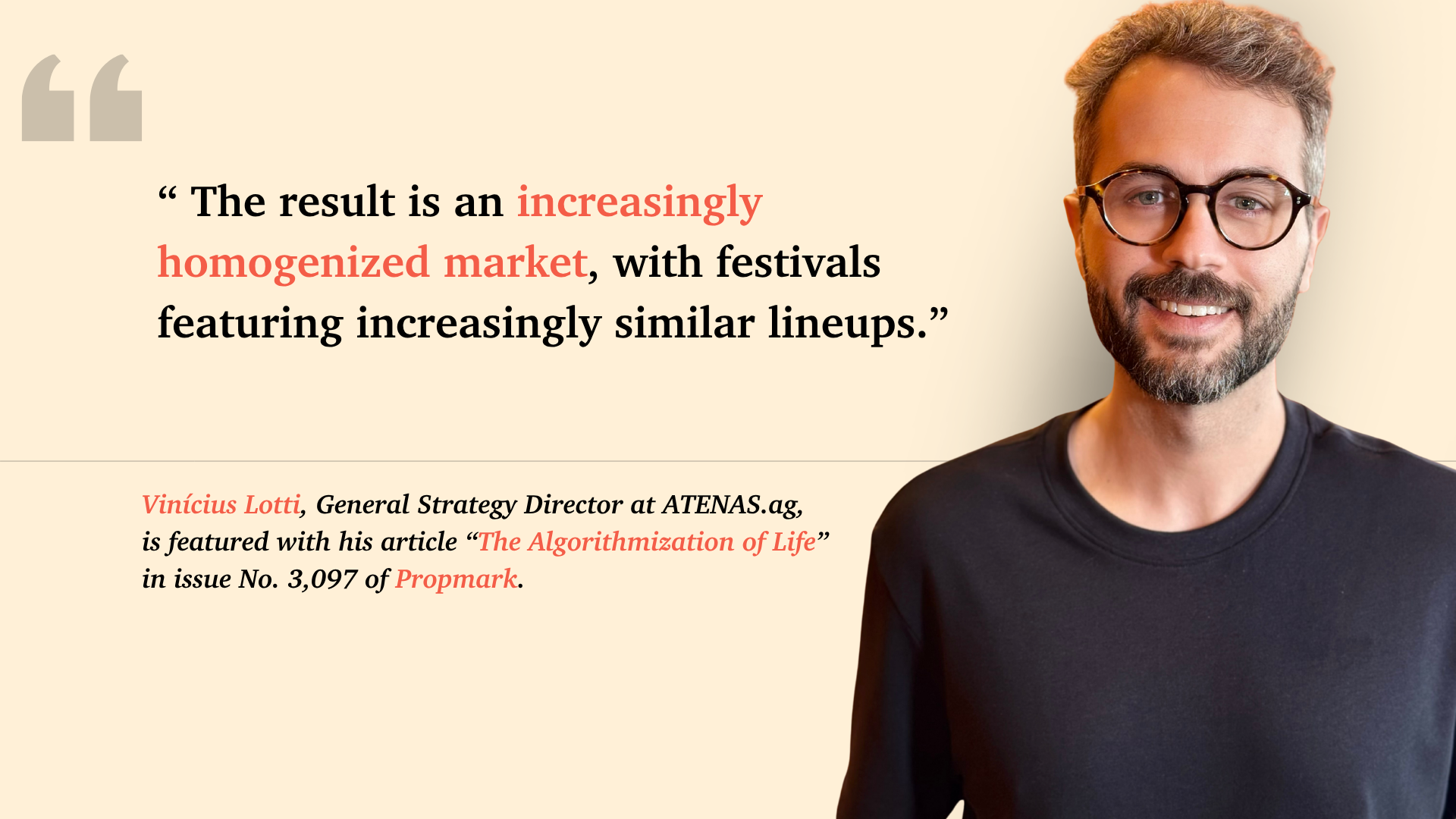
The result of this is an increasingly homogenized market, festivals with very similar lineups, homogenized music tastes, and artists with predictable sounds and aesthetics.
The problem with this is that algorithms are extremely efficient at identifying patterns of preference. Genuine discovery, on the other hand, almost never arises from patterns.
It arises from the unexpected, from experimentation, from the chance we take, from the friction of seeking what we want or "don't want".
It arises when we find something we weren't looking for.
When we listen to an artist who sounds nothing like what we usually listen to.
When someone introduces us to a reference outside of our bubble.
It is about challenging our own tastes and expanding our repertoire, rather than simply reinforcing what we already know.
I think there lies a great opportunity for brands that want to stand out and become relevant in the era of algorithms and in such a saturated territory like the music industry.
Festivals, shows, and events should not only be seen as spaces for gathering and physical experiences. They are environments for discovery, creating emotional memories, and expanding one's repertoire.
Maybe that's why brand-owned festivals, which assist us in breaking out of our comfort zones and moving away from autopilot, like Heineken No Line-Up Festival and C6 Fest, are gaining so much relevance and generating so much buzz. Not because they ignore the algorithms, but precisely because they challenge the audience to break away from them.
These are festivals that understand the importance of the human factor in musical curation and in the design of experiences and narratives that promote surprises, discoveries, and full attention to what one is hearing and experiencing in the present moment. They are festivals created by people passionate about music, not by streaming play numbers.
Curation is not just about organizing a lineup.
Curation is about creating sensory journeys, experiences that break away from the ordinary and provoke unexpected encounters.
It's about introducing the unknown. It's about generating enough friction so that we can feel or discover something new. And this is closely related to the world of brands.
For years, marketing has embraced the idea of personalization. And rightly so. Being relevant in the Attention Economy is essential.
But perhaps it is time for a counter-movement:
Será que as marcas deveriam apenas oferecer aquilo que gostamos ou nos provocar a sair de nossas bolhas?
In a scenario where practically everything around us is optimized to predict our next steps, the unexpected begins to gain a new value.
Perhaps the most interesting role of brands in music is not to reinforce existing preferences, but to create the conditions for new preferences to emerge.
The first task belongs to algorithms. The second may be one of the most meaningful missions a brand can take on today.
Helping us recover our critical thinking and reclaim our ability to make authentic choices.
To close this reflection, I leave you with one final thought:
When was the last time you broke out of your algorithmic bubble?
Link to the article published on the Propmark website:
https://propmark.com.br/opiniao/artigos/a-algoritmizacao-da-vida/